English
- Home >
- Curriculum >
- English >
English
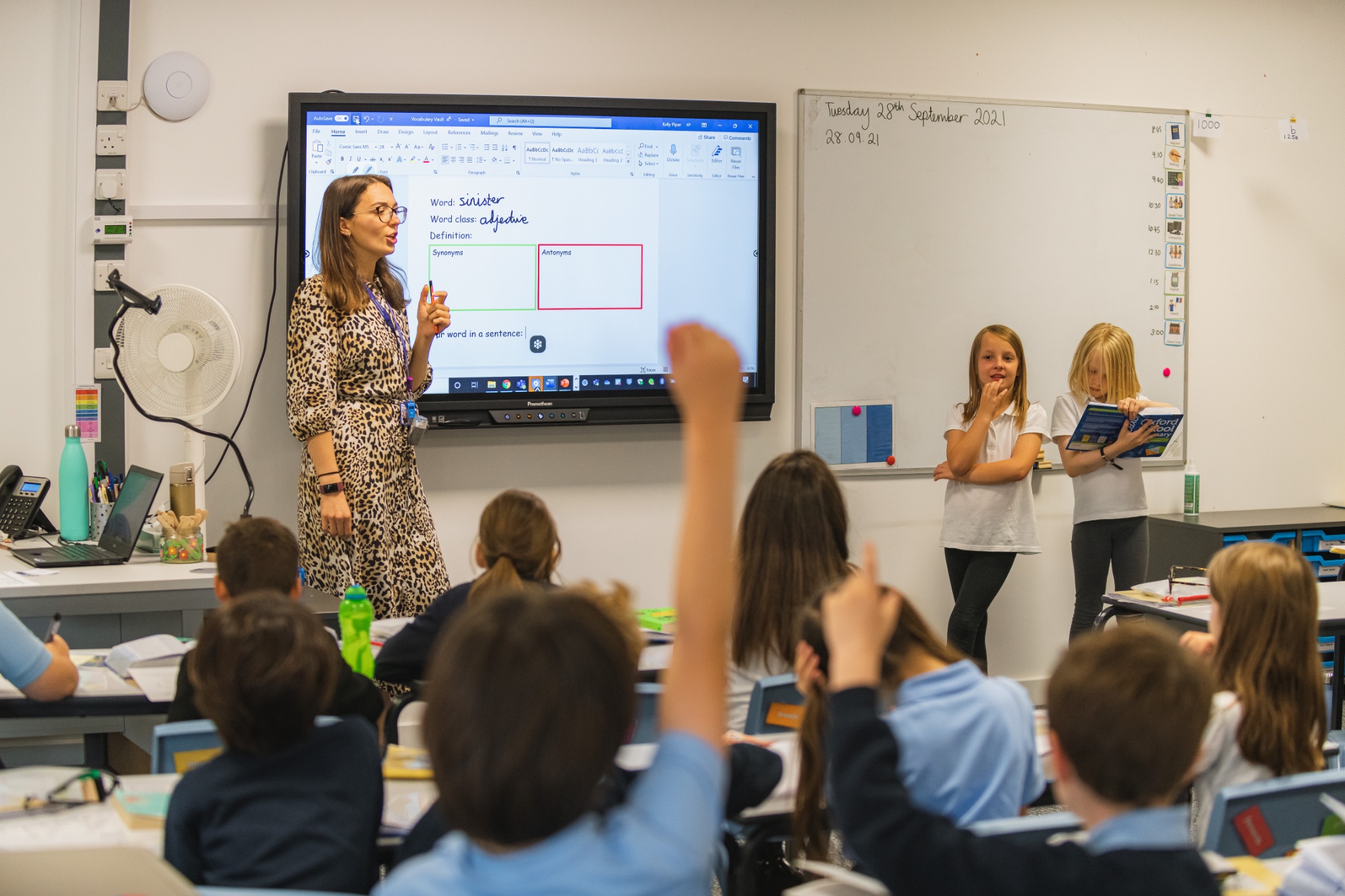
The skills taught within English underpin access to learning across the curriculum. Language unites the curriculum and is essential to all forms of communication. Our children learn language through opportunities for speaking and listening, reading and writing, as well as opportunities to develop their language skills through creativity and play. At Waterbeach, we use high-quality texts to stimulate interest and provide good models of language and writing, which teachers then use to develop children’s’ literacy skills through carefully planned units of work.
Speaking and Listening
Communication is an essential skill which is developed in a variety of ways throughout the whole curriculum and school day. We teach our children how to talk to each other appropriately in order to improve their learning through ‘Talk for Learning’ strategies; providing them with opportunities to discuss, debate, present, chat and express their opinions in many differing situations.
Reading
Reading unlocks the opportunity for our children to develop culturally, emotionally, intellectually, socially and spiritually. It enables our children both to acquire knowledge and to build on that which they already know. At Waterbeach we aim to foster a love of reading for pleasure and, to do this, we endeavour to provide children with the skills required to be able to read fluently and comprehend what they read. Our library is well stocked, with up-to-date, quality fiction and non-fiction texts that children can choose from to support their learning, with every class having a weekly timetabled visit. Each class also has a well-stocked smaller ‘class library’. Children have many opportunities to share texts as a whole class, group or individually, through Whole Class Guided Reading sessions, Reading for Pleasure sessions, as well as additional reading opportunities throughout the school day. We teach children how to read using the Little Wandle phonics scheme and develop the skills to enable them to understand the meaning of texts through additional fluency and prosody sessions. As they become more proficient at decoding texts and reading them fluently, the focus moves towards interpretation and helping them to develop a deeper understanding of the texts that they read.
Writing
We encourage our children to write for a range of purposes and audiences, where possible, providing stimulating real-life contexts in which to write, linked to the learning across the curriculum. Through a carefully crafted curriculum which places high-quality texts at the centre of our writing, children are given opportunities to develop their writing progressively across a range of fiction, non-fiction and poetry text types and genres each term. Spelling, punctuation and grammar are progressively taught, so that our children can express their ideas, opinions and views with clarity and confidence. Children are also taught how to edit and self-assess their own writing in order to help provide them with the agency and encouragement to self-improve. Handwriting is taught from the Early Years, with an initial focus on developing core muscle control and a correct grip before moving on to correct letter formation. We encourage children to join as soon as they are able to form all letters correctly and consistently, usually by the time that they begin Key Stage 2, with children in Years 5 and 6 expected to be writing in a neatly joined style.